Tariff Liberalisation Offered on 70% of Lines Covering 95% of Bilateral Trade
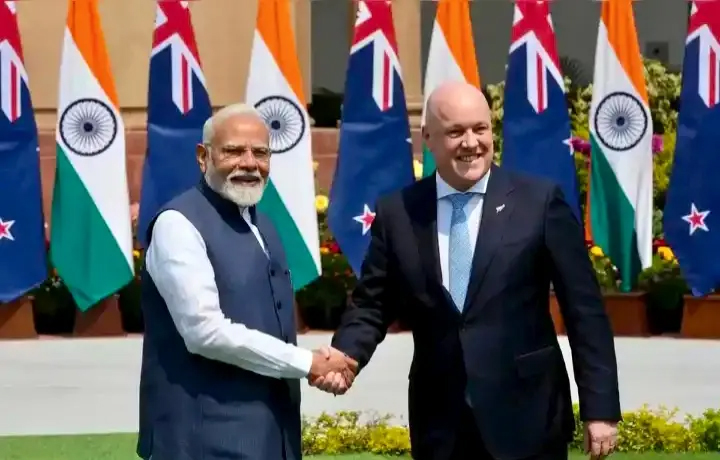
New Delhi, December 22: India and New Zealand, under the leadership of Prime Minister Shri Narendra Modi, have concluded a comprehensive, balanced and future-oriented Free Trade Agreement (FTA), marking a significant economic and strategic milestone in India’s engagement with the Indo-Pacific region. The agreement stands as one of the fastest-concluded FTAs by India and aligns with the national vision of Viksit Bharat 2047.
Formal negotiations began on March 16, 2025, during a meeting between the Minister of Commerce and Industry, Shri Piyush Goyal, and New Zealand’s Minister for Trade and Investment. The agreement was finalised after five formal negotiation rounds and several in-person and virtual intersessions marked by sustained and intensive discussions.
The FTA establishes a high-standard economic partnership that promotes employment, facilitates skill mobility, advances trade- and investment-led growth, encourages innovation in agricultural production, and enhances MSME participation to strengthen long-term economic resilience.
Speaking on the occasion, Commerce and Industry Minister Shri Piyush Goyal said, “This Free Trade Agreement is about building trade around people and unlocking opportunities—for our farmers, entrepreneurs, students, women and innovators. By boosting production and farmers’ incomes, the agreement opens doors for businesses through advanced manufacturing capabilities and provides our youth with global opportunities to learn, work and grow.”
Elimination of tariffs on 100% of New Zealand’s tariff lines provides duty-free access for all Indian exports, enhancing competitiveness in labour-intensive sectors such as textiles, apparel, leather, footwear, marine products, gems and jewellery, handicrafts, engineering goods and automobiles—directly supporting Indian workers, artisans, women, youth and MSMEs.
The FTA offers New Zealand’s most ambitious and comprehensive services commitments to date. India has secured extensive commitments in high-value sectors including IT and IT-enabled services, professional services, education, financial services, tourism, construction and other business services, creating significant new opportunities for Indian service providers and skilled employment.
Commerce Secretary Rajesh Agrawal described it as “a new-generation trade agreement built on complementarities in tariffs, agriculture, investment and skills, expanding India’s export strengths and supporting labour-intensive growth and services.”
Leave a Reply