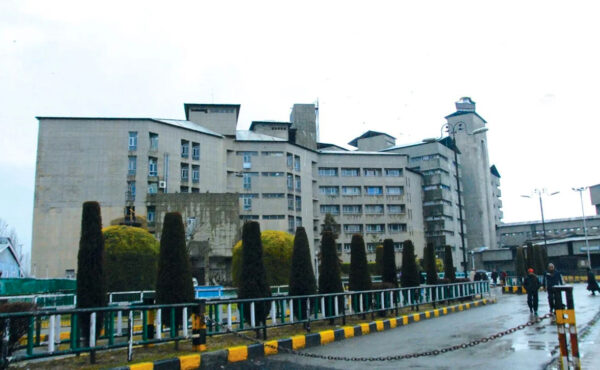
Srinagar, March 24: The Sher-i-Kashmir Institute of Medical Sciences (SKIMS) has adopted a decentralised, technology-driven ward-based care model to enhance patient services, Director Dr Muhammad Ashraf Ganai said on Tuesday, while announcing plans to fill 1,100 posts to reduce waiting time.
The move is aimed at strengthening healthcare delivery within Jammu and Kashmir and reducing the need for patients to travel outside the region for advanced investigations and treatment.
“We don’t want any patient to go outside Jammu and Kashmir for any investigation,” Ganai told the news agency Kashmir News Trust, outlining the institute’s vision to upgrade services and ensure accessibility to high-end medical care locally.
He said SKIMS is working on bridging gaps in infrastructure and manpower while simultaneously planning a futuristic programme to expand advanced services across departments.
According to the Director, around 1,100 vacancies will be filled through the Jammu and Kashmir Services Selection Board (JKSSB) and the Jammu and Kashmir Public Service Commission (JKPSC), a move expected to significantly improve service delivery and reduce patient load pressure.
He said the recruitment drive is part of a broader effort to streamline operations and improve response time in wards and specialised units.
Ganai said the institute has also commissioned advanced medical equipment across wards, including a linear accelerator worth approximately ₹39 crore, aimed at strengthening cancer treatment services.
“In every ward, we have commissioned equipment to ensure patients receive timely and efficient care,” he said.
He added that the decentralised ward-based system allows for quicker diagnosis, better monitoring and improved coordination among healthcare professionals.
The Director said SKIMS is making notable progress in research, patient care and academics, positioning itself as a leading tertiary care institution in the region.
“We are excelling in research, patient care and academics,” he said, adding that efforts are underway to build a comprehensive healthcare ecosystem capable of meeting future challenges.
He said the introduction of advanced technology and specialized equipment is expected to enhance treatment outcomes and reduce dependency on external healthcare facilities. [KNT]
Leave a Reply