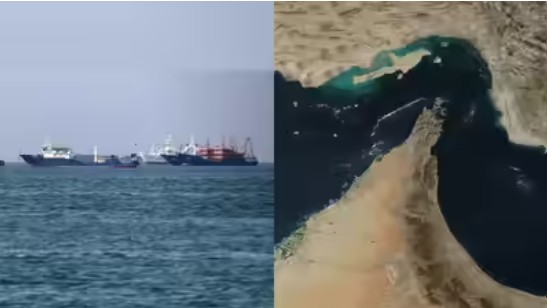
London/Moscow, Apr 14: The United Kingdom on Tuesday distanced itself from the US decision to blockade tankers linked to Iran at Iranian ports, while Russia warned that the security situation in the Strait of Hormuz is evolving unpredictably and remains deeply concerning.
Kremlin spokesman Dmitry Peskov said the situation in the Strait of Hormuz is “changing rapidly” and “developing in different directions,” underscoring the uncertainty surrounding the crisis. He expressed hope that the current truce would hold and eventually lead to a lasting peace.
In London, UK Chancellor of the Exchequer Rachel Reeves rejected Washington’s blockade strategy, calling it the “wrong approach” and confirming that Britain would not participate.
“We are not getting involved in the US blockade; we do not think that is the right approach,” Reeves said, adding that launching a conflict without clear objectives or an exit strategy was “a folly.”
Shipping industry leaders also voiced alarm over the escalating tensions. John Denholm, Chairman Designate of the International Chamber of Shipping (ICS), described the situation as “extremely concerning” and termed the US move a “step backwards.”
“We were encouraged when the ceasefire began, but developments since then are not going well,” CNN quoted Denholm as saying during an event in Hong Kong.
He stressed the need to reopen the Strait of Hormuz and warned against measures such as charging tolls for passage through international waters, calling them unacceptable.
Iran has effectively restricted access to the strait since the conflict began, requiring vessels to coordinate with Tehran and reportedly pay fees for safe passage. Denholm noted that around 20,000 seafarers remain stranded in the Persian Gulf under stressful conditions, though not in immediate danger.
The ICS, which represents over 80 per cent of the global merchant fleet, said ensuring the safety of seafarers remains its top priority.
The developments follow the collapse of US-Iran talks on April 11, with US Vice President JD Vance confirming that Washington’s delegation had returned without a deal, further heightening tensions in the region.
Moreover, The International Energy Agency (IEA) has projected the sharpest quarterly drop in global oil demand since the COVID-19 pandemic.
The agency’s monthly oil market report predicts that global oil demand will decline by 1.5 million barrels per day in the April–June period.
“Initially, the deepest reductions in oil use have occurred in the Middle East and Asia-Pacific,” the IEA noted. “However, as scarcity and higher prices persist, demand destruction is expected to spread.”
For the full year, the IEA now anticipates a slight contraction in global oil demand of 80,000 barrels per day.
On the supply side, the agency reported a global decrease of 10.1 million barrels per day last month, emphasizing that attacks on energy infrastructure in West Asia and ongoing restrictions on tanker movements through the Strait of Hormuz have caused the largest oil supply disruption in history.
UNI AAB RSA
UK rejects US Hormuz blockade; Russia warns situation ‘extremely concerning’
Leave a Reply